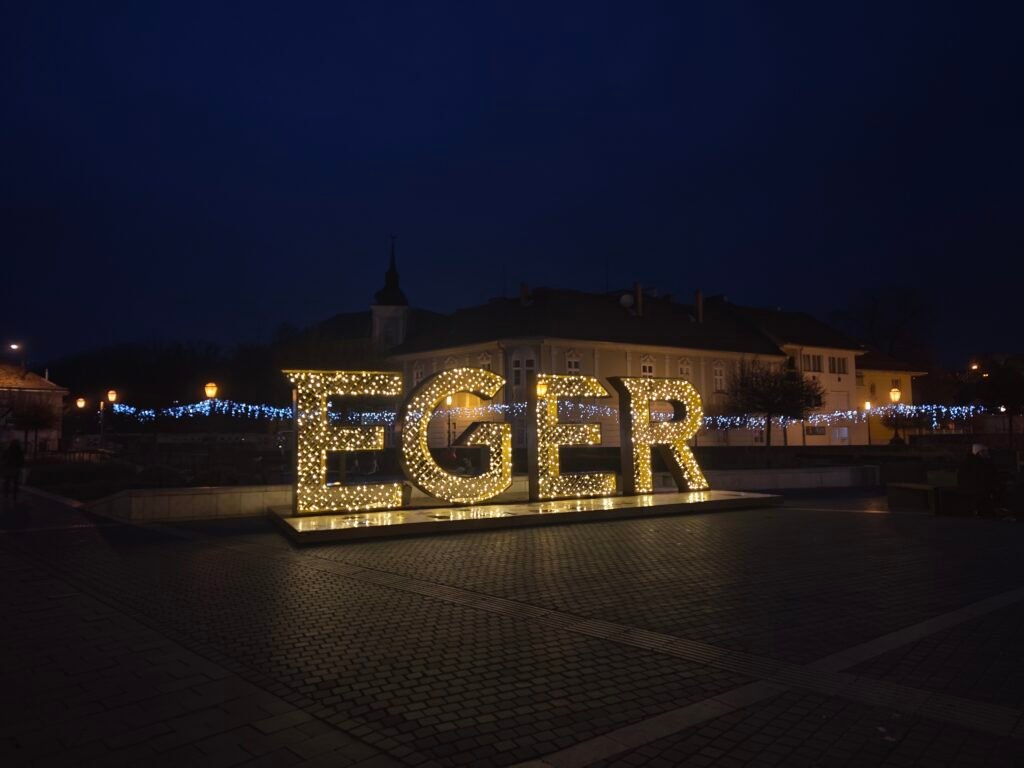
The EGER sign on Dobó Square in Eger. Archive photograph: 2025-12-17. An illustration of the square in 2025; decorations shown do not promise the same appearance in 2026. Photo: PetyaGatya / Wikimedia Commons / CC BY 4.0. No additional edits; size may be adjusted for display.

Eger has two clearly visible levels: the castle above and city life at its foot. First your eye catches the walls, then the square, bell towers and houses that make you want to turn off the direct route. If you enjoy cities where major history does not overshadow small details, take a closer look at this place in northern Hungary.
You can give part of the day to the fortress and leave the rest for Baroque streets. Or begin with the centre and decide how much energy you want to give to the climb. Getting to know a city does not have to become a race between every sight. Let’s see which sides of Eger are best planned separately and which fit pleasantly into one walk.
The castle: first decide what you want to see
Eger Castle is connected with the city’s defence in 1552 and the name of István Dobó. But a visit is not limited to one date. The fortress complex has museum exhibitions, and the Bishop’s Palace stands out among its historic buildings. The city’s official castle page explains the general history.
Before travelling, choose what interests you most: the siege, the architecture or a particular exhibition. That determines how much attention to give the castle rather than just the centre below. Check tickets, admission hours and access to the rooms you need on the castle museum’s official website. Not every part of a large historic site is necessarily open at the same time.
On a cool day, a simple plan is particularly useful: which exhibition to visit, where to finish and how to return to your city walk. The view across the rooftops is another reason to linger. If a step-free route matters to you, check access to your chosen area before visiting.
Dobó Square: stop and look around
Below, the visit continues on Dobó Square. The monument to the castle’s defender, the Minorite Church, the houses and the open space give several reasons to pause. Here, put the map aside for a moment and simply look at how the square works: where the streets lead, which façades catch your eye and where the next lane begins.
The Minorite Church is one of this walk’s Baroque themes. The national tourism portal Visit Hungary describes the centre, courtyards and square. It helps you choose landmarks in advance. Once there, leave room for an ordinary pause: have something hot to drink, look at a window’s decoration or return to a street you have just passed.
Eger does not need to be summed up as “historic”. Look for different layers instead: strong walls above, decorative church details below, a small inner courtyard between houses. The walk then becomes more than the same succession of attractive façades.
The Turkish baths: another chapter of the city
The minaret is not Eger’s only reminder of its Ottoman heritage. The Turkish baths are connected with it too, as described in Visit Hungary’s official article. This is a separate theme to add to your introduction to the city if bathing culture interests you.
An operating bath and the archaeological ruins of a bath are different places, though. Do not choose a visit based only on similar names. When checked on 22 November 2026, the museum website listed the Valide Sultan Bath Ruin among its closed sites. That does not mean every bath in the city is closed, nor does it confirm access to the operating Turkish Bath on your date.
If you want to bathe, check the arrangements at your chosen complex beforehand: opening hours, visiting procedure and what you need to bring. Do not base a purchase on promises of a therapeutic effect in a general tourism description. For a walk around the historic centre, it is enough to understand where the city’s tradition came from.
Putting the day together without rushing
You could begin at the castle, walk down to Dobó Square and continue along nearby streets. Or explore the centre first, then arrive at an exhibition at your chosen time. These are two possible orders, not a finished itinerary with verified walking times for every section.
In November, it is better not to leave every walk until the end of the day: check the forecast, museum hours and how to return to your accommodation in advance. On a short trip, one substantial visit and the centre can offer more than several admissions in a row. Food and an ordinary walk need time too:)
If this way of discovering places appeals to you, take a look at our selection of five Greek cities. Plan the journey to Eger separately from the sights. On Bestlines you can check available coach stages for your date; a direct service to Eger is not assumed here.