In short: EES (Entry/Exit System) is the EU’s electronic register of entries and exits for non-EU citizens, including Ukrainians and Moldovans. It became fully operational on 10 April 2026 at all external borders of 29 European countries and replaced passport stamps. There is nothing to apply for or pay in advance: registration happens at the border and is free.
| Item | What to know |
|---|---|
| Launch | Gradual from 12 October 2025, fully from 10 April 2026 |
| Who it applies to | Non-EU citizens on short stays (up to 90 days in 180) |
| Data collected | Passport data, facial image, fingerprints, date and place of entry and exit |
| Cost | Free |
| Who is exempt | EU citizens, holders of an EU residence permit or national long-stay visa |
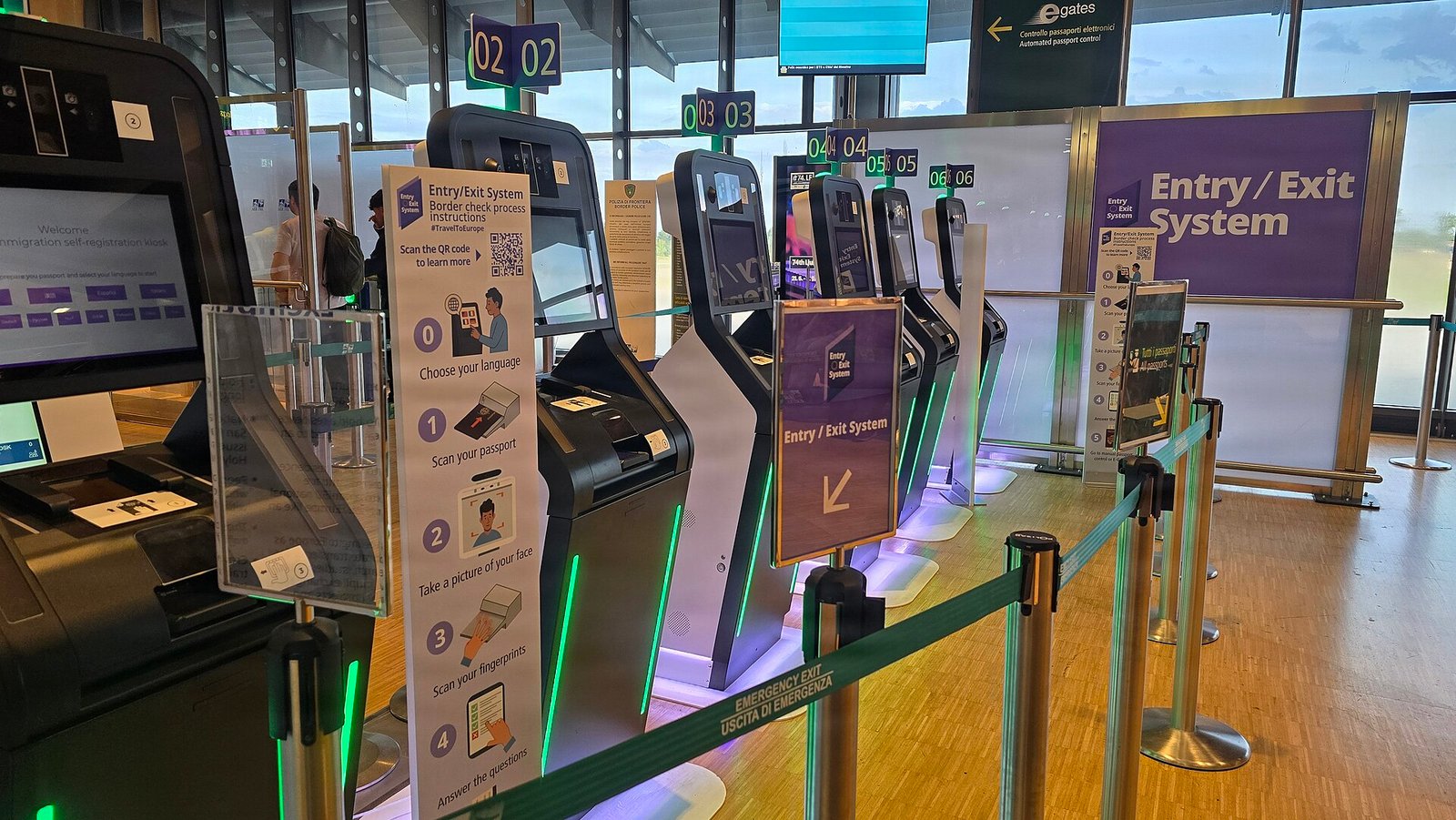
What EES is and why it exists
Border guards used to stamp passports on entry and exit, and the days of stay were counted by hand. Now every crossing is recorded in a shared EU database. The system works out how many of your 90 days in any 180-day period you have used and flags overstays automatically.
Along with passport data, EES stores biometrics: a facial image and four fingerprints. They let the system recognise you on later trips and help detect forged documents.
How the first registration works
The first time you cross the border after EES started, a border guard or a self-service kiosk will:
- scan your passport;
- take a photo of your face;
- take four fingerprints (children under 12 are not fingerprinted);
- possibly ask about the purpose of your trip, accommodation and funds.
The first registration takes longer than a normal check. On later trips your data is already in the system, so the check is quicker: usually a face photo or a single fingerprint is enough.
What changed for bus travel
At a land border the bus stops at the checkpoint and passengers go through control one by one. In the first months of EES, queues at some crossings grew, especially in summer and around holidays. Allow extra time if you are connecting to a flight or a train.

How to prepare
- Check that your biometric passport is valid.
- Keep your accommodation booking, return ticket or other proof of the purpose of your trip at hand.
- If you fly after the bus, choose a flight at least 4–6 hours after the scheduled arrival.
- Watch your days: the system counts 90 days in 180 automatically, and overstaying will cause problems on later trips.
- If you hold a residence permit or national visa, show it together with your passport: EES does not apply to you.
EES and ETIAS are not the same
EES works at the border itself and is free. ETIAS is a future online authorisation for €20 that you will need before travelling; it has not launched yet. Details in ETIAS for Ukrainians: when it starts.
Passengers most often go through EES on routes such as Lviv — Warsaw, Kyiv — Warsaw and Lviv — Krakow. Tickets from FlixBus, Sem Bus and other carriers can be bought online.
EES FAQ
No. EES registration is free and happens at the border.
No. Border guards or self-service kiosks collect the data when you cross the EU’s external border.
Children under 12 are not fingerprinted; a facial image is taken.
No. Holders of an EU residence permit or national long-stay visa are not registered in EES.
The first registration takes longer, especially on busy days. Later checks are faster.
Updated 22 October 2026. Source: European Commission (home-affairs.ec.europa.eu). Rules may change — check the latest information before you travel.